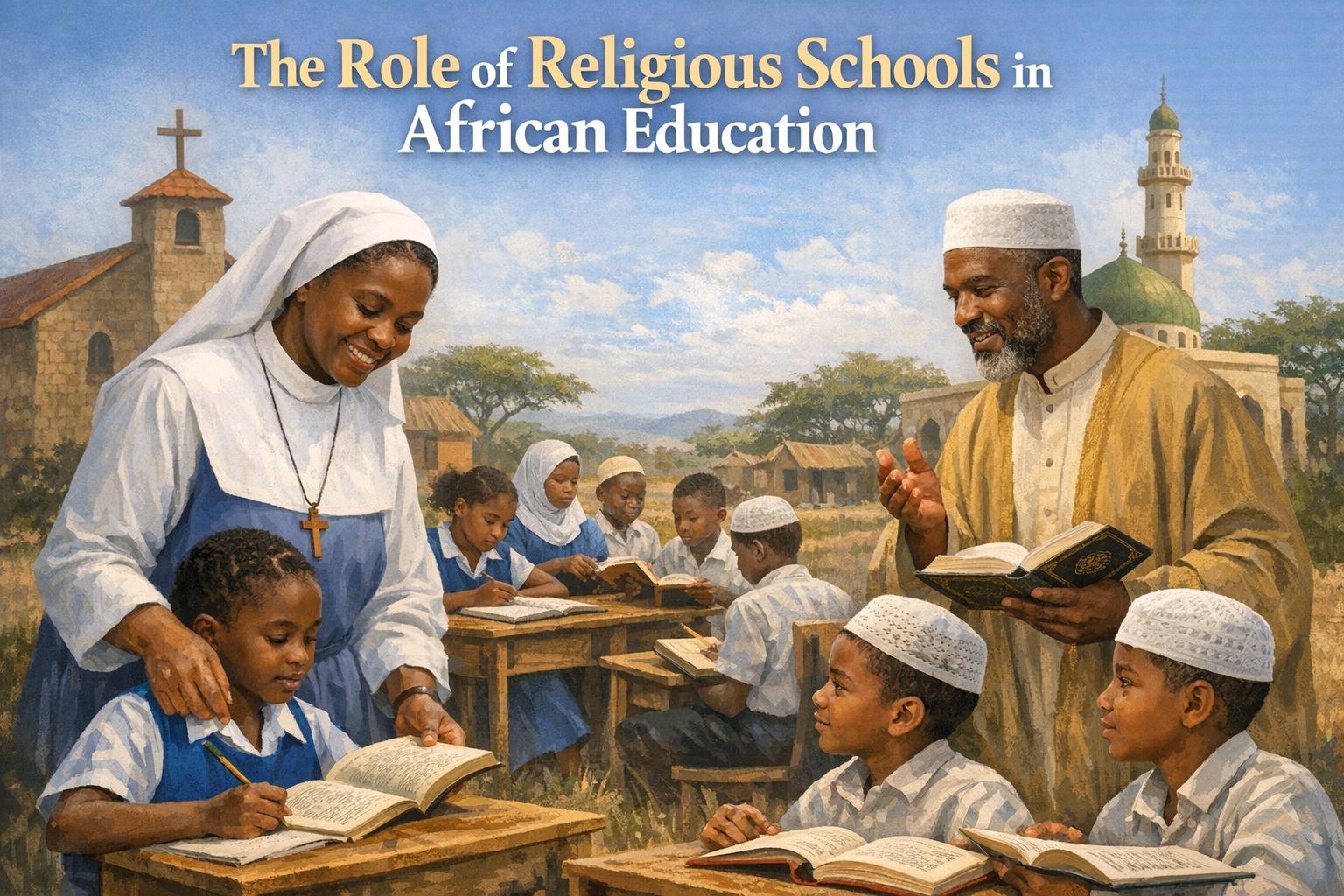
Historical Development of Religious Schools in Africa
Religious schools have historically been pivotal in shaping formal education systems across Africa. Serving as the first structured learning institutions in numerous regions, Christian missionary schools began to spread throughout the 19th and early 20th centuries. Their establishment was largely influenced by the religious and colonial interests of European powers. Conversely, Islamic education holds a deeper-rooted history on the continent, primarily in North and West Africa, where Qur’anic schools have been active for centuries, focusing on the teachings of the Quran.
The connection between mission schools and European colonial administrations was often intrinsic. These schools not only provided literacy and numeracy education but also served as early centers for vocational training and teacher education. Alongside, Islamic traditions through madrasas and Qur’anic schools primarily delivered religious instruction, albeit contributing significantly to literacy in both Arabic and, in certain regions, local languages that employed Arabic scripts.
Access to Education
The contribution of religious institutions in expanding education access cannot be overstated, predominantly in rural or underserved areas of many African countries. Post-independence, government education systems were often constrained in reach, which led faith-based organizations to step in and establish primary and secondary schools where the state had limited presence.
As per data from entities such as UNESCO, non-state actors, including religious institutions, continually deliver a significant portion of educational services in several African nations. In specific countries, faith-based schools are responsible for more than 20 percent of the enrollment in primary schools.
Government and Religious Institutions Partnership
Public-private partnerships have become increasingly common as governments and faith-based organizations work collaboratively to maximize educational reach. This collaboration often ensures that education systems benefit from additional resources and expertise, a necessity given the growing populations and limited governmental capacity.
Despite the involvement of faith-based institutions, challenges persist concerning the seamless integration of these entities within the broader educational framework. Policy specifications need to address funding distribution, curriculum alignment, and quality control. Such challenges necessitate a nuanced approach to policy development, ensuring that all schools, regardless of their origin, contribute equally to the overarching educational goals.
Curriculum and Educational Standards
The curriculum provided within religious schools can be quite diverse. Nowadays, both Christian and Islamic schools frequently follow national curricula in tandem with religious teaching. Such synergies allow students to participate in national examinations and facilitate their transition into tertiary education or the workforce. Oversight by education ministries is crucial to assure adherence to academic standards and improve quality across the board.
Nonetheless, in certain contexts, particularly within informal Qur’anic schools, the primary focus might still remain on religious texts. However, there are ongoing initiatives in countries like Senegal and Nigeria to integrate formal subjects, such as mathematics and science, into the traditional religious education systems. This integration not only broadens the scope of education offered but also ensures that students are better equipped for future educational and career opportunities.
Efforts Towards Standardization
The educational landscape demands a balance between preserving religious education’s integrity while ensuring that students receive a comprehensive education that aligns with national objectives. The drive towards standardization is often spearheaded by governments and international organizations, aiming for a holistic approach in education that caters to varied learning needs without compromising on cultural and religious identities.
Social and Cultural Influence
Religious schools have provided substantial influence over social norms, language usage, and community leadership dynamics. Alumni of both mission and Islamic schools frequently occupy key positions in politics, administration, and civil society. In numerous countries, early nationalist leaders were educated within mission schools, acquiring crucial literacy and organizational skills.
These establishments also play a significant role in reinforcing moral and ethical norms within communities. Education in these schools typically includes religious instruction combined with character education founded on particular faith traditions. This dual role—academic and moral—remains a hallmark for many faith-based schools and is seen as indispensable by community members.
Religious Schools as Custodians of Culture and Language
By continually providing education within cultural and religious contexts, religious schools have emerged as custodians of both tradition and modernity. They have preserved languages, promoted cultural understanding, and facilitated societal changes necessary for progress. Their ability to navigate these dual roles seamlessly is central to their ongoing relevance.
Gender and Inclusion
The impact of religious schools on gender access to education presents a mixed narrative. In certain regions, mission schools initiated some of the earliest expansions in girls’ education. However, in other contexts, cultural and social norms linked to religious traditions deterred girls’ attendance, particularly in higher educational tiers.
Recent endeavors by both Christian and Islamic organizations are pushing for enhanced girls’ enrollment and retention. International partners, including UNICEF, collaborate with faith-based groups to amplify educational access and equity, targeting gender-based discrepancies head-on.
Overcoming Gender-Based Challenges
To overcome gender-based educational barriers, various programs have been initiated targeting cultural change, community involvement, and awareness-raising. Such programs emphasize the importance of educating girls and demonstrate the social and economic benefits that arise from increased female participation in education.
Partnerships and Policy Challenges
Today, modern African education systems typically reflect partnerships between state authorities and faith-based organizations. These partnerships often encompass public funding mechanisms, teacher training initiatives, and curriculum reforms which religious schools integrate into their systems. The World Bank has documented how non-state providers, including religious schools, can effectively complement public education systems as long as regulatory frameworks are clearly defined.
Nevertheless, policymakers encounter challenges regarding quality assurance, teacher qualifications, and the delicate balance needed between respecting religious autonomy and upholding national standards. Achieving the goal where students gain essential skills while honoring religious identities continues to be a significant policy concern.
Ensuring Quality and Equity
Policy frameworks must address the dual objectives of ensuring quality education is universally accessible while maintaining fairness and equity. This involves developing thorough evaluative measures to assess educational outcomes in religious schools and ensuring that all students, notwithstanding their school of origin, have equal opportunities within national education systems.
Contemporary Role
Today, religious schools remain an entrenched component of the African educational framework. They operate across various educational levels—primary, secondary, and in some cases tertiary—and blend faith-based values with standardized curricula, thereby contributing significantly towards national educational goals.
Their continued significance highlights broader trends of cooperation between state and non-state stakeholders in education. Though their forms and influences greatly vary across different countries, religious schools persist in molding access, instruction, and community engagement within African education systems.
The Path Forward
As African nations continue to evolve educationally and socio-economically, religious schools will likely further redefine their roles to meet emerging needs. This adaptive capacity is crucial for ensuring that educational systems are responsive, comprehensive, and beneficial across diverse societal spectrums. In doing so, religious schools not only preserve historical legacies but also contribute actively to future-oriented educational developments.