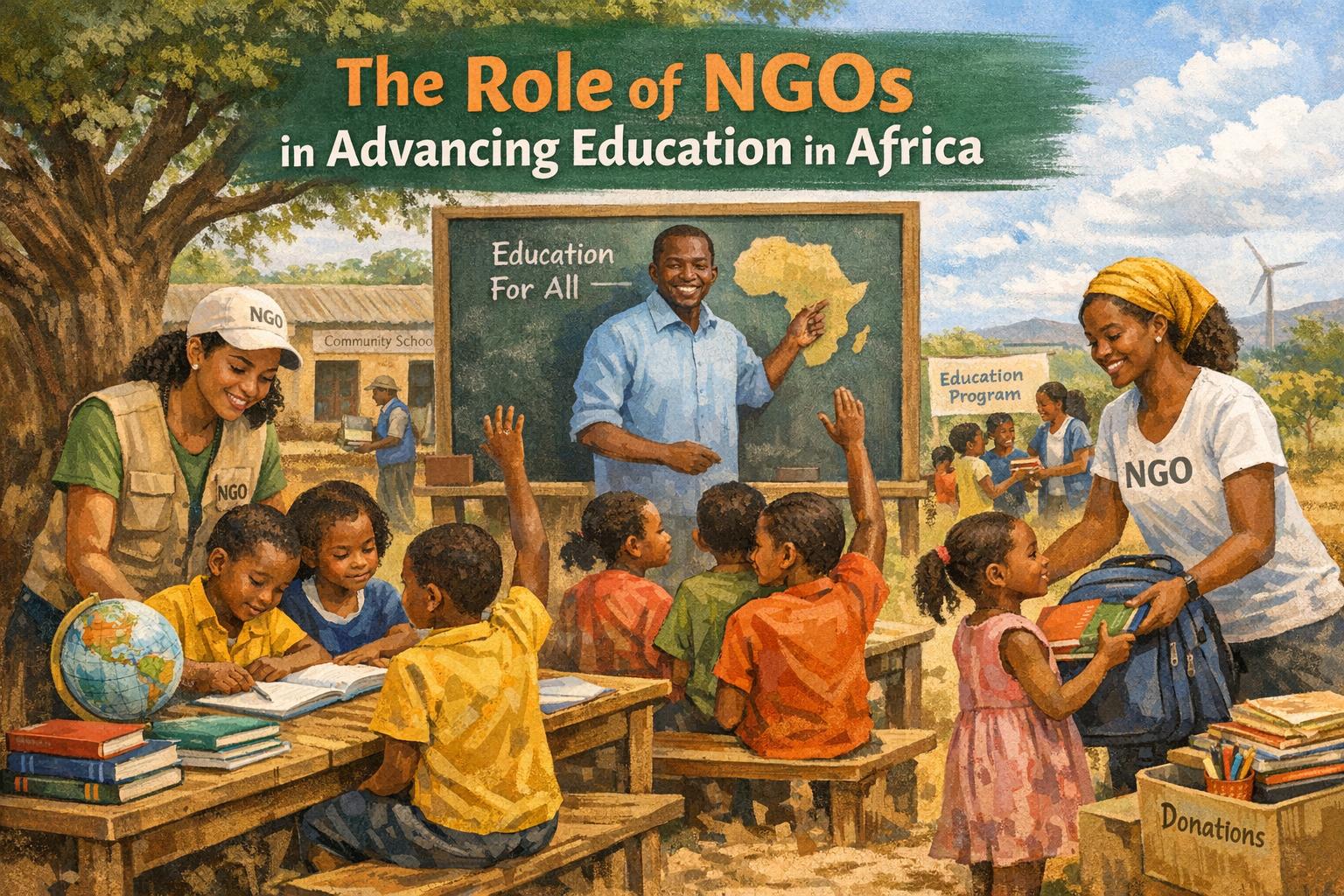
Non-Governmental Organizations (NGOs) play a significant role in expanding access to education across Africa, impacting numerous areas where improvement is direly needed. While national governments carry the primary responsibility for managing public education systems, NGOs make notable contributions by providing resources, technical expertise, and targeted interventions aimed at addressing gaps in infrastructure, teacher training, and student support. Their efforts often align with public policies and bolster progress toward achieving international development goals.
Expanding Access to Basic Education
Across parts of Sub-Saharan Africa, access to primary and secondary education is uneven, a challenge that many NGOs are striving to overcome. According to data from UNESCO, millions of children are out of school due to poverty, conflict, disability, or geographic isolation. NGOs intervene by constructing schools, providing temporary learning spaces in crisis areas, and supporting enrollment campaigns.
Organizations such as Save the Children implement community-based education programs in rural regions where government services may be lacking. These initiatives often place a focus on girls’ enrollment, recognizing the persisting gender disparities in several countries. By tackling financial barriers through the provision of actions such as covering school fees, supplying uniforms, or offering scholarships, NGOs enable more children to attend school.
Infrastructure Development and School Building
An essential aspect of expanding access to education is the physical infrastructure that supports learning environments. NGOs play a pivotal role in the construction of classrooms and schools in regions where the government lacks the resources or capacity to provide necessary facilities. These efforts significantly contribute to reducing the distance children need to travel to access education, particularly in rural and remote areas.
Temporary learning spaces established by NGOs in emergency settings provide immediate solutions for displaced or crisis-affected populations. These makeshift structures are crucial for maintaining educational continuity and ensuring that children do not miss out on vital learning opportunities.
Enrollment campaigns spearheaded by NGOs also raise awareness about the importance of education, often employing community engagement strategies to encourage school attendance.
Targeting Gender Disparities
Gender inequality in education remains a significant barrier to progress in Africa. Cultural norms, economic constraints, and safety concerns frequently hinder girls’ access to education. NGOs actively work to dismantle these barriers by implementing programs specifically designed to support girls’ education.
By providing financial assistance in the form of scholarships, uniforms, and school supplies, NGOs reduce the economic burden on families, making it more feasible for them to send their daughters to school. Additionally, educational programs often incorporate gender-sensitive content and safe learning environments, allowing girls to thrive academically and socially.
Innovative campaigns that highlight the benefits of girls’ education not only influence parental and community attitudes but also pave the way for systemic changes that promote gender equality.
Improving Education Quality
Access to education is just one piece of the puzzle—the quality of education is equally important. In many African education systems, teacher shortages and limited professional development opportunities pose significant challenges. NGOs provide much-needed support by conducting training workshops, offering curriculum assistance, and developing mentoring programs aimed at enhancing instructional methods.
CAMFED’s efforts in supporting girls’ education involve investing in teacher training and leadership development to equip educators with the tools they need to succeed. Likewise, the international NGO BRAC has pioneered community-based schooling models that emphasize structured lesson plans and continuous assessment, ensuring a more robust educational experience.
Teacher Training and Professional Development
The deficiency of well-trained teachers is an issue that directly affects the quality of education. NGOs address this gap by organizing training programs that focus on pedagogical skills, modern teaching techniques, and subject matter knowledge. These training sessions enable teachers to deliver more effective and engaging lessons, which in turn enhances student learning outcomes.
Furthermore, mentorship programs offered by NGOs create opportunities for less experienced teachers to learn from seasoned professionals, fostering a collaborative environment within schools. This approach not only boosts teachers’ confidence and competence but also contributes to their long-term professional development.
Innovative Educational Approaches
To stimulate improvements in education quality, many NGOs pilot innovative teaching and learning methodologies. These often include bilingual education programs, the development of digital learning platforms, and accelerated learning models designed to assist students who have fallen behind.
Bilingual education programs help bridge linguistic divides, supporting students in mastering both their native languages and foreign languages, typically English or French. By integrating technology into the classroom through digital learning platforms, NGOs offer interactive and personalized learning experiences that cater to diverse student needs and learning paces.
Accelerated learning models offer customized curriculums that help students catch up with their peers, effectively reducing dropout rates and enhancing educational attainments. When successful, these innovative approaches have the potential to inform national education reforms, as ministries of education seek to replicate these effective strategies at a larger scale.
Supporting Education in Emergencies
Armed conflict, displacement, and climate-related disasters present formidable challenges that disrupt schooling across various African regions. NGOs are often at the forefront of responding to these crises, establishing temporary classrooms and distributing learning materials to affected communities. Cooperation with agencies such as UNICEF is crucial for including education in broader humanitarian response efforts.
Education programs in emergency contexts serve not only academic purposes but also provide stability and protection for children in vulnerable situations. Many NGO-led initiatives incorporate psychosocial support alongside academic instruction, addressing the mental health needs of students who have experienced trauma.
Temporary Learning Spaces and Rapid Response
In response to emergencies, NGOs quickly set up temporary learning spaces that allow children to continue their education even amidst instability. These spaces serve as safe havens where children can escape the chaos of their surroundings, enjoying a sense of normalcy and routine.
Rapid responses ensure that educational disruptions are minimized, as NGOs coordinate with local authorities and international partners to distribute necessary materials and resources. By doing so, they help maintain educational continuity for children in dire circumstances.
Integration of Psychosocial Support
The integration of psychosocial support into educational programs in emergencies is vital for addressing the emotional and psychological needs of children. NGOs recognize that students affected by conflict, displacement, or natural disasters require comprehensive care that extends beyond academic instruction.
Through activities such as counseling, peer support groups, and recreational sessions, NGOs promote healing and resilience among students. These programs help mitigate the adverse effects of trauma, enabling children to focus on their studies and better cope with challenging situations.
Strengthening Community Engagement
Community involvement is a crucial component of improving educational outcomes. NGOs often collaborate with local leaders, parent associations, and civil society groups to foster school participation and accountability. This cooperative approach can lead to improved student retention rates and greater local ownership over school management.
In certain instances, NGOs offer training sessions for school management committees to enhance transparency in budgeting and oversight. This is in line with recommendations from institutions such as the World Bank, which emphasizes the importance of governance and accountability within educational systems.
Building Local Capacity and Ownership
By actively involving community members in the decision-making processes of schools, NGOs help build local capacity and ownership. This community-centered approach empowers parents and residents to identify issues within the education system, advocate for their solutions, and hold authorities accountable.
Training for school management committees often covers best practices in financial management, resource allocation, and monitoring and evaluation techniques. These initiatives contribute to the creation of sustainable, community-driven educational improvements.
Enhancing Parental and Community Involvement
Strong correlations exist between parental involvement in education and student success. NGOs seek to enhance parental engagement by organizing workshops and informational sessions that highlight the importance of education and provide strategies for supporting children’s learning at home.
Community-based activities initiated by NGOs—such as literacy programs, school health campaigns, and extracurricular opportunities—foster a culture of learning beyond formal school settings. These initiatives build partnerships with local stakeholders and build an education ecosystem that encourages and nurtures learner success.
Challenges and Sustainability
Despite their beneficial contributions, NGOs face certain limitations and challenges. Frequently reliant on external donor funding, which may be time-bound, these organizations often grapple with the sustainability of their projects. Long-term success requires collaboration with governments and alignment with national education strategies. However, inconsistent regulation and fragmented efforts can reduce overall impacts.
To address these challenges, partnerships between NGOs, governments, and multilateral institutions like the African Development Bank are becoming more prevalent. These collaborations aim to scale proven interventions and integrate them within national policy frameworks, thereby enhancing their sustainability and effectiveness.
Reliance on External Funding
The dependency on external donor funding poses a significant challenge for NGOs aiming to sustain their projects long-term. Fluctuations in donor priorities and funding cycles can lead to abrupt disruptions in project implementation.
To mitigate this issue, NGOs are encouraged to diversify their funding sources, develop income-generating activities that support sustainability, and establish robust partnerships with local governments and private sectors.
Coordination with National Authorities
For NGOs to optimize their impact and ensure sustained progress, coordination with national education authorities is essential. This requires alignment of NGO initiatives with national education policies, frameworks, and strategies.
By integrating their efforts with those of national governments and prioritizing local context and needs, NGOs can create synergies that strengthen the overall education sector. Establishing communication channels and joint planning mechanisms encourages collaborative action and maximizes the effectiveness of education interventions.
Conclusion
NGOs serve a pivotal role in advancing education across Africa, complementing government efforts by expanding access, improving quality, supporting learners in crisis settings, and strengthening community engagement. While national governments hold primary responsibility for their education systems, collaboration with NGOs is crucial in addressing education gaps and promoting inclusive learning opportunities throughout the continent.
As Africa continues to progress towards achieving its educational development goals, the contributions of NGOs, alongside the cooperation of governments and international partners, remain an essential mechanism for building resilient and equitable education systems. The work of NGOs illustrates promising potential for innovation, partnership, and transformative change within the expansive educational landscape of Africa.