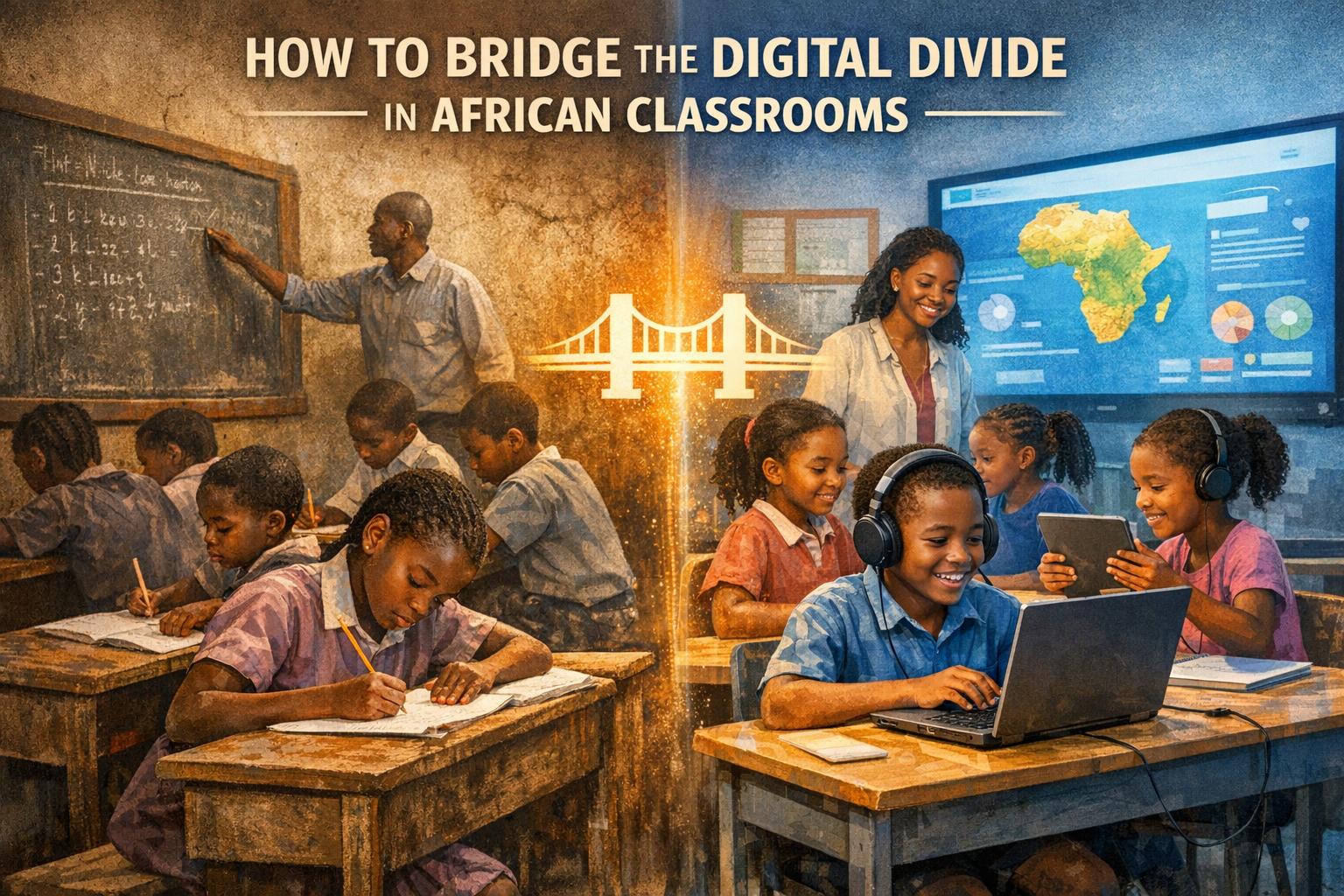
The digital landscape in Africa presents a complex challenge in the realm of education. The notion of a “digital divide” is not merely a theoretical concept but a tangible barrier to providing equitable education across the continent. This divide is recognized and acknowledged at high levels, such as by the World Bank, which points out that access to reliable internet, digital devices, and comprehensive teacher training has a direct impact on learning outcomes. Many African regions face obstacles due to limited connectivity, high data costs, and a lack of sufficient infrastructure. These factors collectively hinder the integration of digital tools into day-to-day classroom instruction. The process of overcoming such hurdles necessitates well-coordinated investments in infrastructure development, policy reform, teacher capacity building, and the creation of locally relevant educational content.
Infrastructure and Connectivity
Across the African continent, access to affordable broadband is still largely inconsistent. According to data from the International Telecommunication Union (ITU), internet penetration rates in numerous African nations remain significantly below the global average, particularly affecting rural areas. Governments and private telecom providers play pivotal roles in the expansion of 4G and 5G network services, the deployment of fiber-optic cables, and the provision of satellite internet solutions to remote communities.
Public-private partnerships hold tremendous potential in minimizing the cost of deployment and expediting the rollout process. Infrastructure-sharing agreements among operators, supplemented by tailored subsidies aimed at rural broadband development, have proven successful in countries like Kenya and Rwanda. It’s important that connectivity expansion is complemented by electrification efforts. Many schools face the challenge of lacking a stable power supply. Off-grid solar systems provide a viable solution in places where grid access is uneconomical or unfeasible.
Affordable Devices and Maintenance
Possessing reliable connectivity is only part of the equation. To enable meaningful digital participation, both students and teachers must have access to functional devices. Bulk procurement programs supported either by governments or development agencies can help lower the per-unit cost of laptops and tablets. Some initiatives focus on fostering locally assembled devices, which can diminish import dependency and generate employment opportunities within the local economy.
However, successful procurement goes beyond just the acquisition of devices; it must include strategies for maintenance and lifecycle management. Devices require regular software updates, routine technical support, and secure storage solutions. Without continuous funding allocated for repairs and replacements, initiatives focused on hardware distribution often falter after the initial distribution phases. The establishment of regional repair centers, coupled with the training of school-based technicians, can significantly contribute to the long-term sustainability of such programs.
Teacher Training and Digital Literacy
The integration of technology in the classroom hinges largely on the competence of educators. The UNESCO digital education framework emphasizes that educators require both technical proficiency and pedagogical strategies to effectively utilize digital tools. Professional development programs should move beyond imparting basic computer literacy and focus instead on the integration of curriculum, online safety measures, and data privacy awareness.
A blended training model, which incorporates both in-person workshops and online learning modules, allows teachers to acquire practical skills while simultaneously experiencing digital learning firsthand. Continuous professional development, as opposed to one-off seminars, ensures sustainable growth and improvement. Ministries of education should work to align teacher standards with national digital strategies to integrate these competencies institutionally.
Localized and Relevant Content
Access to devices and connectivity is rendered less effective if relevant educational content is not available. Many digital learning platforms rely heavily on materials developed outside of Africa, which may not align with national curricula or be available in local languages. Encouraging the development of locally produced digital content enhances both relevance and cultural context.
Open Educational Resources (OER) present a cost-effective option for educational institutions. Governments and universities can collaborate to adapt open textbooks and interactive modules to meet local standards. Supporting local educational technology startups encourages innovation tailored to specific regional needs. Establishing clear content quality standards helps maintain academic rigor and consistency.
Policy and Regulatory Environment
A coherent national digital education policy is essential for guiding long-term investment strategies. Typically, these policies outline infrastructure targets, device strategies, teacher training requirements, and cybersecurity standards. Regulatory frameworks that lower taxes on educational devices and data services have a considerable impact on reducing costs for both schools and families.
The establishment of data protection laws is equally critical. As classrooms increasingly adopt learning management systems and cloud-based tools, protecting student information becomes paramount. Policymakers must find a balance between enhancing accessibility and ensuring security by enforcing standards for data storage, obtaining consent, and managing digital identities.
Monitoring and Measuring Impact
It is important that efforts to bridge the digital divide are supported by measurable indicators. Governments and development partners should focus on tracking metrics such as student-to-device ratios, average internet speed per school, teacher digital competency levels, and academic performance outcomes linked to technology use.
Independent evaluations help improve accountability and resource allocation. Adjustments based on evidence ensure that programs remain aligned with the educational objectives rather than solely focusing on the distribution of technological tools. Transparent reporting encourages public trust and sustained investment.
Community and Private Sector Engagement
Involving the community plays a crucial role in ensuring the sustainability of digital education programs. Parent associations and local community leaders can help bolster device security, encourage responsible digital tool usage, and promote digital literacy initiatives within the home environment. On the other hand, private companies can contribute through corporate social responsibility initiatives, infrastructure investment, and the provision of technical expertise.
Regional cooperation among African nations can further amplify progress. Shared procurement frameworks, cross-border fiber networks, and knowledge exchange platforms work to limit duplication of efforts while leveraging the bargaining power of collective action.
Moving forward, bridging the digital divide in African classrooms is a multifaceted undertaking that extends beyond simple hardware distribution. Effective strategies need to integrate infrastructure expansion, teacher training, local content development, and supportive policy frameworks. Through coordinated action and sustained investment, digital technology can play a consistent and measurable role in enhancing educational access and quality throughout the continent.