Teacher Shortages in African Education Systems
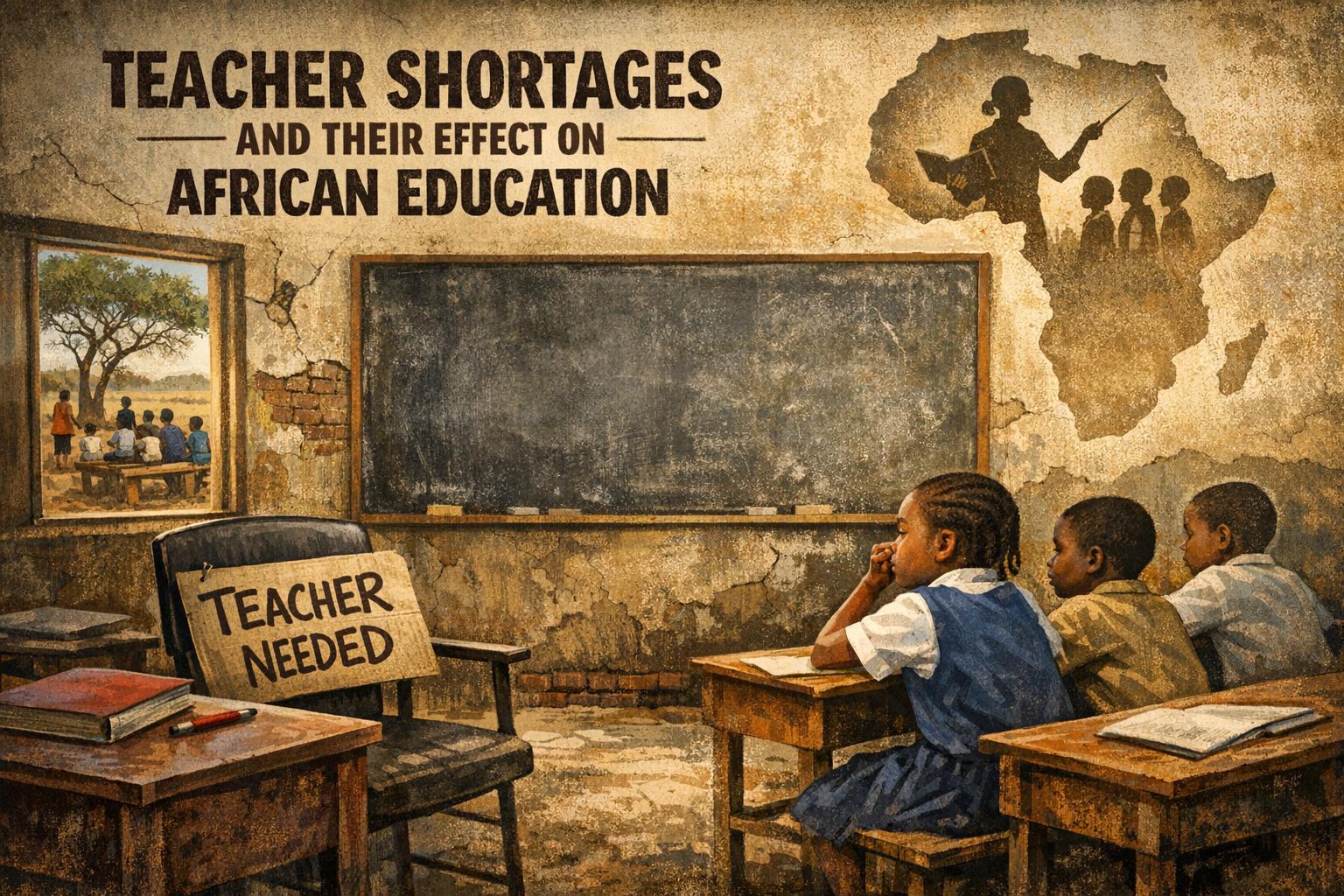
Teacher shortages remain a persistent challenge across many African education systems. Population growth, expanded access to primary education, and limited public financing have increased the demand for qualified teachers faster than supply. As a result, classrooms in several countries are staffed by underqualified personnel or operate with significantly higher pupil-to-teacher ratios than global recommendations. This situation calls for urgent and coordinated efforts across multiple sectors to ensure that educational gains are not undermined by staffing deficits.
Scale of the Teacher Shortage
According to data from the UNESCO Institute for Statistics, sub-Saharan Africa faces the largest teacher gap in the world. Millions of additional teachers are needed to achieve universal primary and secondary education targets. Rapid demographic growth is a major factor contributing to this shortage. Africa is home to the world’s youngest population, and school-age cohorts continue to expand every year, exerting enormous pressure on existing educational infrastructure and personnel.
In many rural areas, the distribution of teachers is uneven. Urban schools often attract more qualified staff due to better infrastructure, living conditions, and amenities, while remote communities experience chronic vacancies and insufficient staffing levels. This imbalance leads to substantial differences in educational quality within the same country, with rural students often receiving a second-tier education compared to their urban counterparts.
Urban versus Rural Distribution Challenges
The inequality in teacher distribution between urban and rural areas is compounded by several factors. Urban areas generally offer better salaries, benefits, and career advancement opportunities, making them more attractive to teachers. Conversely, rural areas may suffer from a lack of essential services such as healthcare, transportation, and high-quality housing, deterring potential teachers from accepting posts in these locations. This divide highlights the need for targeted interventions to ensure equitable distribution of educational resources across regions.
Causes of Teacher Shortages
Several structural factors contribute to the enduring shortage of teachers across African education systems. A primary issue is limited funding for teacher recruitment and training. Education budgets in many African countries must cover a myriad of expenses including infrastructure development, staff salaries, teaching materials, and administrative overheads. With constrained fiscal space, governments often struggle to allocate sufficient resources to the recruitment and training of new teachers.
Challenges in Funding and Recruitment
Governments face the daunting task of prioritizing budget allocations amidst other pressing needs such as healthcare and infrastructure development. As a result, education, particularly aspects related to teacher training and recruitment, may not receive the necessary funding to meet demand. The reliance on donor funding and international loans can complicate budget planning and create dependency.
Working conditions represent another major factor influencing teacher shortages. In many regions, teachers face significant challenges such as large class sizes, inadequate professional development opportunities, and delays in salary payments. These suboptimal working conditions reduce retention rates and may encourage trained educators to seek alternative employment opportunities. Migration further exacerbates the problem, as some qualified teachers move abroad or transition to private sector positions in search of better compensation and working conditions.
Teacher Training Capacity and Infrastructure
The capacity for teacher training is often limited by inadequate infrastructure at colleges and certification institutions. Many of these institutions are under-resourced and lack the facilities to accommodate and educate a sufficient number of teaching candidates each year. Additionally, in conflict-affected areas, instability disrupts both teacher education programs and regular classroom instruction, further diminishing the pool of qualified teachers available to enter the workforce.
Impact on Learning Outcomes
Teacher shortages have measurable effects on learning quality and student outcomes across the continent. High pupil-to-teacher ratios significantly reduce the amount of attention and support educators can provide to individual students. This situation makes it more challenging to assess student progress, provide timely and meaningful feedback, and adapt instruction to accommodate diverse learning needs.
Quality of Instructional Delivery
In some cases, individuals without formal pedagogical training are placed in classrooms to bridge staffing gaps. While such measures may serve as temporary solutions, they often compromise instructional quality and efficacy. Research supported by the World Bank indicates a strong correlation between teacher subject knowledge, pedagogical preparation, and student performance. Thus, the absence of properly trained educators can adversely affect educational outcomes.
Multigrade teaching is a common practice in under-resourced rural schools, where one teacher is responsible for educating students from several grade levels simultaneously. Although this approach can enhance access to education, it requires specialized training and skills that many educators lack. The complexity of effectively managing a diverse classroom environment places additional strain on already-stretched teachers and may limit student learning opportunities.
Regional and Gender Dimensions
The effects of teacher shortages are not uniform across regions or demographics. Fragile and conflict-affected states face particularly acute challenges in maintaining stable and effective teaching workforces. Displacement, damaged infrastructure, and ongoing security risks disrupt recruitment and retention efforts and hinder the stabilization of school environments after conflicts end.
Gender Disparities in Education
Gender disparities within the teaching workforce are also relevant and have broader implications for educational access and outcomes. In many communities, there is a significant shortage of female teachers, which can negatively impact girls’ enrollment and retention rates, particularly at the secondary level. Evidence from UNICEF highlights that the presence of female educators plays a crucial role in improving attendance and creating a more supportive school environment for girls, facilitating their educational success and long-term empowerment.
Policy Responses and Reform Efforts
Recognizing the critical need to address teacher shortages, governments and international partners have introduced several strategic responses aimed at alleviating the problem. These initiatives include accelerated teacher training programs designed to quickly augment the teaching workforce, financial incentives for postings in rural or underserved areas, and increased investments in continuous professional development for educators.
Incentives and Support for Teachers
Some countries have revised their salary structures and benefits in an effort to improve retention rates among teachers. This approach may include enhanced salaries, as well as the provision of additional perks such as housing or transport allowances aimed at attracting and retaining teachers, particularly in challenging or remote locations.
Technology plays an increasingly central role as a complementary tool in teacher education and support. Distance learning platforms facilitate teacher training and dissemination of instructional resources, enabling educators to enhance their skills and knowledge base. However, the effectiveness of digital solutions relies heavily on reliable electricity and internet access, conditions that are unevenly distributed across the continent.
Long-term Strategic Planning and Coordination
Long-term planning is essential to address teacher shortages sustainably. Workforce projections, improved data systems, and the strengthening of teacher education institutions can help align supply with projected enrollment growth. Sustainable solutions require consistent budgetary commitments and enhanced coordination between key stakeholders, such as ministries of education, finance, and training institutions, to holistically address staffing challenges.
Outlook for the Future
Addressing teacher shortages in Africa is closely linked to broader development objectives. Expanding access to education without ensuring adequate staffing levels risks undermining long-term learning outcomes and broader educational goals. While significant progress has been made in increasing school enrollment over the past two decades, maintaining and improving educational quality will depend on prioritizing the strengthening of teacher workforces across the continent.
Achieving sustainable improvement requires balanced policies that effectively combine recruitment, professional support, and retention strategies. Without a sufficient number of well-trained and motivated teachers, achieving long-term educational targets and outcomes will continue to be a significant challenge across large parts of Africa. Addressing these shortages is not only an educational imperative but a critical step towards ensuring equitable access to quality education for all children and youth across the continent.