Vocational training plays a transformative role in enhancing employment prospects across Africa, equipping individuals with practical skills that align with labor market demands. The gap between formal education outcomes and requirements of employers is evident in many African economies. Vocational Education and Training (VET) focuses on technical, occupational, and industry-specific skills, offering a pathway to improve employability, support entrepreneurship, and bolster economic productivity.
The Employment Challenge in Africa
Africa is home to one of the youngest populations globally, with millions of young people entering the labor market annually, according to the World Bank. However, this influx is not matched by the pace of formal job creation, leading to persistent problems of unemployment and underemployment, particularly among youth and women. Employers often face challenges in finding workers with the appropriate technical and practical skills. This mismatch between education and employment underlines a structural issue: traditional academic education often does not equip individuals with market-ready capabilities. Conversely, vocational training directly addresses skills applicable in vital sectors such as construction, agriculture, manufacturing, information technology, and renewable energy.
Aligning Skills with Labor Market Demand
Vocational training stands out due to its alignment with labor market demand. These programs are usually created in collaboration with industry stakeholders, ensuring that curricula incorporate current technologies and business practices. This alignment significantly enhances the prospects for graduates to gain employment shortly after completing their training.
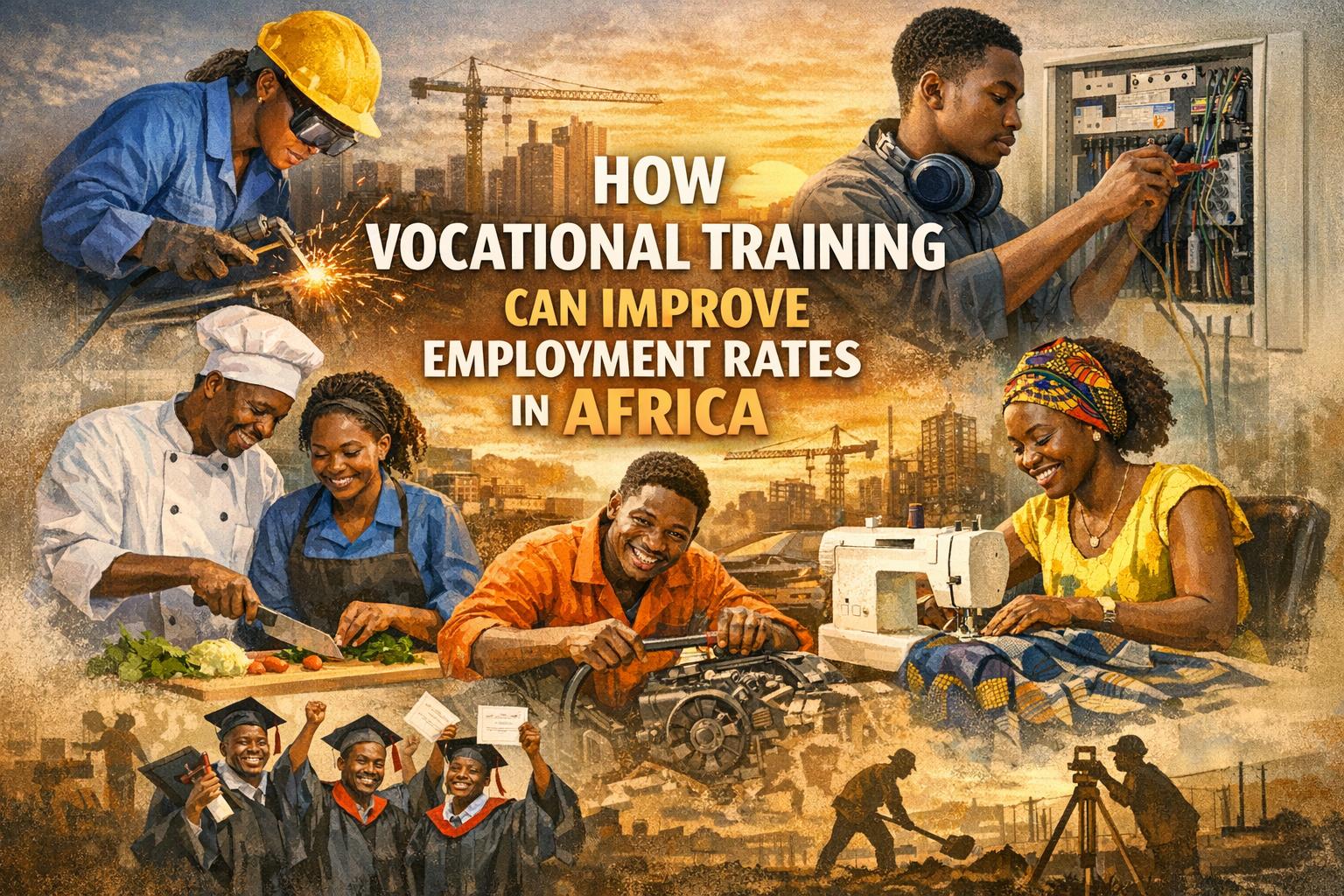
Fields such as electrical installation, automotive repair, welding, and digital services offer concrete solutions to skills shortages in local economies. In nations focused on infrastructure development and industrialization, mid-level technical skills are crucial. Vocational institutions play a direct role in economic growth by supplying these essential skills.
Supporting Small Enterprises and Entrepreneurship
The informal sector forms a substantial part of employment in many African economies. Vocational training not only equips individuals for wage employment but also provides competencies necessary for initiating and managing small businesses. Skills in areas such as tailoring, carpentry, food processing, and mobile phone repair empower graduates to generate independent income.
When combined with fundamental financial literacy and business management training, vocational programs can substantially improve self-employment outcomes. Many institutions supported by the African Development Bank are increasingly incorporating entrepreneurship education into their technical training frameworks.
Enhancing Inclusion and Gender Equity
Vocational training improves employment access for marginalized groups, including women, rural populations, and individuals who do not complete formal secondary education. These programs often have shorter durations and skills-focused content, making them accessible to a broader audience. Further, flexible schedules and community-based training centers facilitate greater participation.
Initiatives to encourage women to enter traditionally male-dominated fields like construction and engineering have shown success in some regions. By widening opportunities beyond conventional roles, vocational programs contribute to narrowing gender disparities in employment.
Strengthening Industry Partnerships
The effectiveness of vocational systems relies on robust collaboration between training providers and industry employers. Practical learning models, such as apprenticeships and internships, offer trainees valuable real-world experience, facilitating their transition to full-time employment.
The International Labour Organization underscores the importance of work-based learning, especially in developing economies. Structured apprenticeships not only enhance technical skills but also develop vital soft skills such as communication, teamwork, and time management.
Addressing Implementation Constraints
Despite the benefits, vocational training in Africa faces multiple constraints, including limited funding, outdated equipment, and inadequate instructor training, all of which can adversely affect program quality. Furthermore, vocational education is often viewed as less prestigious than academic education, deterring enrollment.
To optimize the impact of vocational training, governments and private stakeholders must invest in modern training facilities and frequently update curricula. Establishing effective monitoring and evaluation systems is critical to ensure programs achieve measurable employment results. Data-driven revisions can help maintain alignment with evolving labor market needs.
Long-Term Economic Impact
Enhanced vocational education systems have significant macroeconomic implications. A skilled workforce can attract foreign direct investment, support industrial diversification, and boost productivity. As African economies transition toward manufacturing, services, and technology-oriented sectors, the demand for technically skilled workers is poised to grow.
By investing consistently in vocational training, countries can reduce unemployment rates, increase household incomes, and contribute to social stability. Although the link between skills development and employment growth isn’t automatic, well-designed and market-oriented programs position vocational training as an effective tool for inclusive economic development.
Thus, vocational education should be considered a vital component of a comprehensive employment strategy, encompassing industrial policy, entrepreneurship support, and labor market regulation. With a focus on relevant skills and demonstrable outcomes, African countries can harness vocational training as a pragmatic pathway to increased employment rates.