Access to Education in Africa: Barriers and Solutions
Over the last two decades, access to education in Africa has seen considerable improvements. However, despite the advancements, there are still significant gaps that need to be addressed. As per the data from UNESCO, countries across the continent have witnessed increases in primary school enrollment rates. Nevertheless, completion rates and the availability of secondary and tertiary education are areas that still encounter challenges. Educational inequality is prevalent, especially when comparing urban to rural areas, different income groups, and most notably, among girls and children deeply affected by conflict.
Infrastructure and Resource Constraints
To begin with, one of the major impediments to education in Africa is the insufficient physical infrastructure. Many rural communities across the continent face severe limitations concerning school buildings, electricity, and essential water and sanitation facilities. It’s not uncommon to observe overcrowded classrooms, where the student-to-teacher ratios are excessively high, thereby diluting the quality of instruction provided. A report from the World Bank indicates that in certain Sub-Saharan African countries, a single educator might be accountable for more than 50 students.
Additionally, the lack of access to textbooks, digital tools, and trained educators significantly affects learning outcomes. Although enrollment figures may appear promising, assessments reveal that numerous students fail to acquire fundamental literacy and numeracy skills. This discrepancy between attendance and actual learning underscores inherent structural weaknesses within educational systems.
Addressing Infrastructure Needs
Improving the physical infrastructure in educational settings is paramount. Firstly, investing in the construction of more school buildings, particularly in rural areas, would help reduce overcrowding. Additionally, ensuring the availability of basic amenities such as electricity and running water is crucial for creating an environment conducive to learning. Such improvements can lead to a comprehensive enhancement in educational outcomes.
Furthermore, deploying digital tools more effectively can bridge learning gaps. Technology can facilitate remote learning and provide students with access to a wider array of resources. However, successful integration of digital tools necessitates proper training for educators and ensuring students have the necessary devices and internet access.
Economic Barriers
Economics is another substantial barrier to education for many. While several countries have removed primary school tuition fees, indirect costs associated with education, such as uniforms, transportation, and examination fees, continue to hinder regular attendance. In households with low incomes, children often are needed to supplement the family income through agricultural work, domestic duties, or informal jobs, which detracts from their educational opportunities.
The overall economic instability at the national level can further exacerbate the situation. Nations grappling with debt pressures or economic downturns might struggle to allocate adequate funds for salaries, infrastructure initiatives, and the development of the curriculum.
Strategies to Overcome Economic Barriers
Addressing these economic challenges requires both national and international cooperation to ensure sustainable funding models for education. Creating comprehensive financial policies that subsidize indirect costs for low-income families can significantly enhance access to education. Such policies could include the provision of free uniforms, transportation subsidies, and waiving examination fees.
Additionally, implementing effective cash transfer programs targeted at vulnerable households can encourage school attendance. Ensuring that schools have the necessary resources and financial support to provide quality education is essential for comprehensive systemic reform.
Gender Inequality
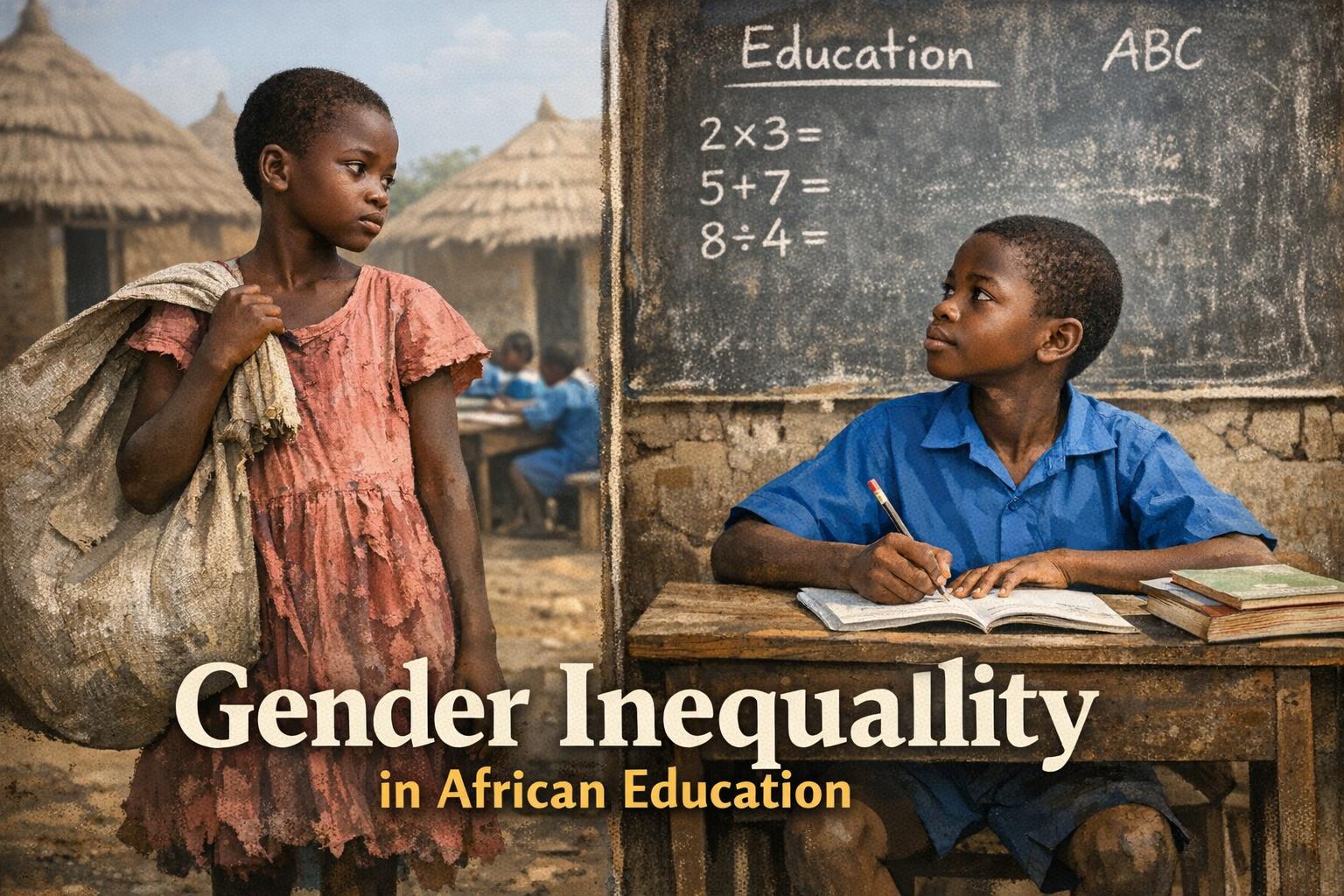
Despite noticeable progress in addressing education inequality, gender disparities remain across the continent. Cultural norms, early marriage, and adolescent pregnancy are factors that frequently constrain educational opportunities for girls. In certain regions, safety concerns during travel to school further exacerbate this issue, resulting in lower attendance rates among girls.
However, it’s important to recognize that gender gaps are not uniformly distributed across Africa. Some countries have achieved near parity in primary education enrollment through effective policy interventions and active community engagement, highlighting that improvements are indeed possible.
Encouraging Gender Equality in Education
Fostering gender equality in the African educational landscape requires multifaceted approaches. Implementing strong educational policies that explicitly target gender disparities can have a significant impact. These may include scholarship programs for girls, initiatives to prevent early marriage, and creating safe transport routes for students.
Moreover, community-based programs and awareness campaigns about the importance of girls’ education can shift cultural perceptions and foster an environment supportive of female education. Engaging community leaders and stakeholders plays a pivotal role in these efforts.
Conflict and Displacement
Armed conflicts and political instability have profound effects on education, disrupting the schooling of millions of children across the continent. According to the UNHCR, displaced populations face particularly limited access to formal education, more so at the secondary level. Schools are often damaged or repurposed during conflicts, and the availability of trained teachers in these regions is severely constrained as they flee affected areas in search of safety.
The consequences of disrupted education are long-lasting, leading to lower employment opportunities and slower economic growth. Reconstructing education systems in post-conflict settings requires prolonged investment and cooperation at both regional and international levels.
Rebuilding Education in Post-Conflict Settings
Post-conflict reconstruction of education systems involves a layered approach focusing on both immediate needs and long-term stability. Initially, it is essential to restore and rebuild educational infrastructure and secure a safe learning environment. This includes repairing school buildings, ensuring the availability of basic amenities, and restocking educational materials.
Subsequentially, reintegrating children into the education system requires tailored support, including psychosocial programs, catch-up classes, and vocational training for older youth. This holistic approach facilitates the reintegration process and ensures that the children have meaningful opportunities for growth and development.
Language and Curriculum Challenges
A significant challenge many African countries face in their educational systems is the use of colonial languages—such as English, French, or Portuguese—as the primary medium of instruction. While these languages can facilitate international integration, they can also serve as barriers for children who speak local languages at home. There is abundant research indicating that educating children in their first language, especially during the early years, can drastically improve understanding and retention.
Another critical factor is the alignment of the curriculum with the contemporary labor market needs. Emphasizing technical and vocational training in the curriculum is crucial for tackling youth unemployment and propelling economic growth.
Enhancing Language and Curriculum Relevance
Addressing language challenges in education necessitates a strategic shift in curriculum design. Promoting multilingual education policies that incorporate local languages can help bridge language barriers. Prioritizing early mother-tongue instruction before transitioning to colonial languages may lead to better educational outcomes.
Furthermore, making curricula more relevant to current economic needs involves integrating technical and vocational training programs. These programs equip students with practical skills that enhance their employability and economic prospects.
Policy Responses and Emerging Solutions
Governments and developmental partners across Africa have introduced numerous reforms aiming to enhance educational access and improve quality. Key solutions include the abolition of school fees, expansion of school feeding programs, increased investment in teacher training, and enhancements in data collection and monitoring systems. The expansion of digital learning initiatives, especially following the educational disruptions caused by the COVID-19 pandemic, has further highlighted the potential benefits of technology in education.
Public-private partnerships have emerged as a significant aspect of education delivery. Initiatives driven by non-governmental organizations and community-based groups fill service gaps, particularly in underserved areas. Targeted cash transfer programs have exhibited measurable success in elevating school attendance rates among vulnerable groups.
Continued Progress and Future Directions
Sustaining progress in African education necessitates consistent funding, robust institutional capacity, and evidence-based policymaking. Enrollment increases mark an advancement; however, improving learning outcomes and achieving equitable access must remain central priorities in policy development.
Examining the effectiveness of existing educational policies can provide insights into what works and what doesn’t, informing future strategies. Collaborative efforts that leverage the strengths of governments, private sectors, and community stakeholders will be crucial to overcoming educational challenges.
Overall, the journey towards a comprehensive, accessible, and high-quality educational system in Africa is ongoing. Although several barriers remain, the ongoing work and collaboration at various levels provide hope for a more educated and prosperous future for the continent’s children.