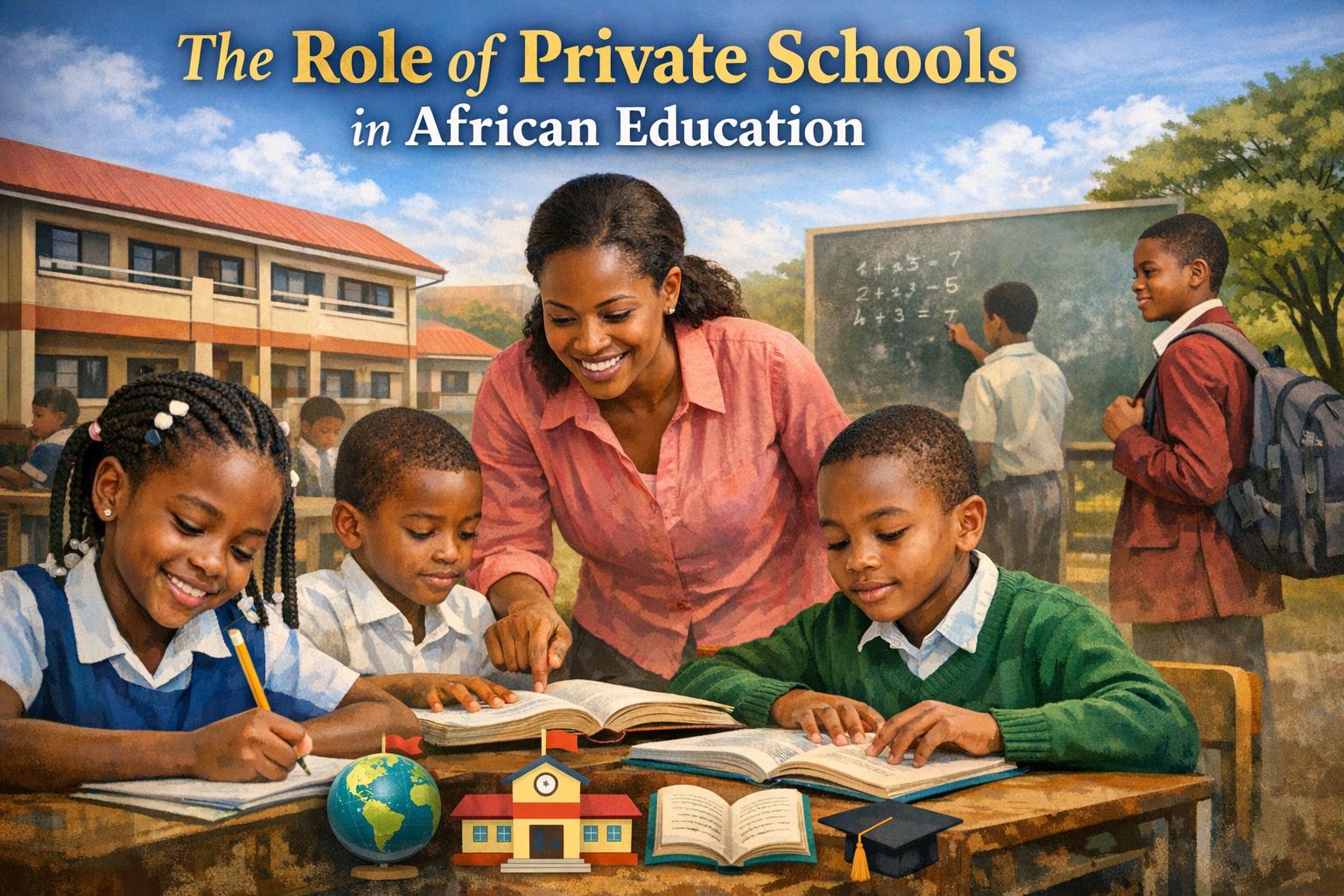
The role of private schools in African education has expanded significantly over the past three decades. Across many countries on the continent, private institutions now serve a substantial share of students at pre-primary, primary, and secondary levels. Their growth reflects demographic pressures, urbanization, and ongoing gaps in public education systems.
Growth of Private Education Across Africa
In recent years, the landscape of education in Africa has experienced a notable transformation, with private schools playing a key role in this evolution. Enrollment in private schools has surged in countries such as Nigeria, Kenya, Ghana, Uganda, and South Africa. According to data from the World Bank, rapid population growth and rising demand for schooling have placed pressure on public systems that often face challenges such as limited infrastructure and shortages in qualified teachers. In response, both low-cost and premium private schools have expanded to address this demand.
In the bustling urban areas, private schools frequently operate alongside public institutions, providing parents with additional choices for their children’s education. In contrast, in some rural regions, private schools step in to fill gaps where government provision is insufficient, ensuring that more children have access to education. The presence of private schools varies widely by country, influenced by factors such as national regulations, income levels, and historical education policies.
Expansion Factors
The expansion of private schools in Africa can be attributed to several key factors. First, demographic changes have played a critical role. With Africa’s population projected to continue growing at a rapid pace, the demand for education continues to rise. Urbanization, spurred by migration from rural to urban areas, has further fueled this demand, leading to increased pressure on existing public education infrastructure.
Secondly, the perception of quality and accountability associated with private schools has driven their popularity. Many parents believe that private schools offer better educational outcomes and are more responsive to their concerns. This perception is especially prevalent in urban centers where the competition among schools can drive improvements in quality.
Moreover, the diverse landscape of private education offers parents a range of choices that cater to different needs and preferences. This diversity includes religious affiliations, curricula, and teaching methods, which allows for a more personalized approach to education.
Types of Private Schools
Private education in Africa is characterized by its diversity, which includes a wide array of school types. These institutions serve various communities and fulfill distinct educational needs.
Faith-Based Schools
Among the numerous types of private schools across Africa, faith-based schools hold a prominent position. These schools are often affiliated with religious organizations, such as Christian or Islamic groups, and have a long-standing presence in countries like Kenya and Ghana. Faith-based schools not only provide traditional academic education but also incorporate religious teachings and values into their curricula. This can be appealing to families who prioritize a faith-based approach to their children’s education.
Community-Run Institutions
Another category of private schools includes community-run institutions. These schools are typically established and managed by local communities with the aim of addressing educational needs within their neighborhoods. Community participation and support are often integral to the functioning of these schools, and they foster a strong sense of ownership and accountability. They also tend to focus on culturally relevant curricula and teaching methods that resonate with the local population.
International Schools
At the upper end of the private school spectrum, international schools cater to expatriate communities and wealthier local families. These institutions often follow foreign curricula, such as the British or International Baccalaureate systems, offering globally recognized education that enables students to pursue higher education opportunities internationally. International schools are known for their high fees and state-of-the-art facilities, attracting students seeking a global perspective on education.
Low-Fee Private Schools
In contrast to premium international schools, low-fee private schools have proliferated in informal urban settlements across Africa. These schools typically charge modest tuition fees and operate with limited resources. However, they attract families who seek smaller class sizes and perceive these schools to be more accountable in comparison to overcrowded public schools. Low-fee private schools play a vital role in providing access to education for children from lower-income families, despite their resource constraints.
Access and Equity Considerations
While the expansion of private schools has contributed to an increase in overall enrollment rates in several African countries, it also raises important considerations regarding access and equity. Data from the UNESCO Institute for Statistics indicate that non-state providers account for a growing share of primary and secondary school enrollment in Sub-Saharan Africa.
Challenges of Access
Access to private education remains uneven, primarily due to the cost associated with tuition payments. Even low-fee private schools require families to pay fees, which can exclude the poorest households from benefiting from private education. In some contexts, this has contributed to educational stratification, where children from higher-income families attend better-resourced schools while those from lower-income families have limited options.
To address these access challenges, different governments have implemented various interventions, including voucher programs, which provide financial assistance to low-income families, allowing them to enroll their children in private schools. Public–private partnerships have also emerged as a strategy to bridge the gap, with governments collaborating with private institutions to increase access and improve educational outcomes.
Equity Considerations
In addition to access, equity remains a key concern. The unequal distribution of educational resources, such as qualified teachers and adequate facilities, can perpetuate disparities between private and public schools. Addressing these disparities requires not only financial support but also robust regulatory frameworks and policies that promote equity and ensure that educational opportunities are distributed fairly across different income groups.
Quality and Learning Outcomes
Assessing the quality and learning outcomes of private schools compared to their public counterparts is a complex task, and research findings in this area are mixed.
Learning Outcomes
Some studies suggest that students in private schools often perform better on standardized tests. This can be attributed to factors such as smaller class sizes, which allow for more personalized attention, and a perceived stronger sense of management accountability. However, it is important to consider the socio-economic background of students when evaluating learning outcomes, as children from more affluent families may already have a head start in terms of resources and support, which can skew the results.
Teacher Qualifications
The qualifications of teachers in private schools also vary widely. While some institutions employ highly trained and certified staff, others may rely on unregistered or less formally qualified teachers to reduce costs. This variability in teacher quality can impact the overall effectiveness of private education. Regulatory oversight by governments plays a crucial role in maintaining minimum standards and ensuring that teachers meet the necessary qualifications to deliver quality education.
Regulation and Policy Environment
The regulation of private education is essential to maintain standards and ensure that schools operate within a coherent policy framework. Governments across Africa implement various measures to regulate private schools through licensing requirements, curriculum standards, and inspection systems.
Challenges in Regulation
The effectiveness of oversight in the private education sector varies from country to country. In some regions, informal or unregistered private schools operate outside the formal education system, making monitoring and regulation difficult. This lack of oversight can lead to concerns about quality and accountability, particularly in low-fee private schools with limited resources.
Policy Considerations
National policymakers are increasingly focusing on how to integrate private providers into national education strategies. Public–private partnerships, where governments subsidize private schools to increase access and improve quality, are under consideration or implementation in several countries. These partnerships aim to harness the strengths of both public and private sectors to create a more inclusive and equitable education system.
Conclusion
Private schools have become a significant component of the education landscape in many African countries. They contribute to expanded access and institutional diversity, while also raising important questions about equity, quality, and regulation. The long-term role of private schools in African education will depend on factors such as demographic trends, public investment levels, and the capacity of governments to effectively oversee a mixed education system.
As African countries continue to develop their education systems, it is crucial to strike a balance between expanding access to quality education and ensuring that this expansion does not exacerbate existing inequalities. Through thoughtful policy and effective regulatory frameworks, private schools can be integrated into a holistic national education strategy that benefits all students, regardless of their socio-economic background.