Introduction
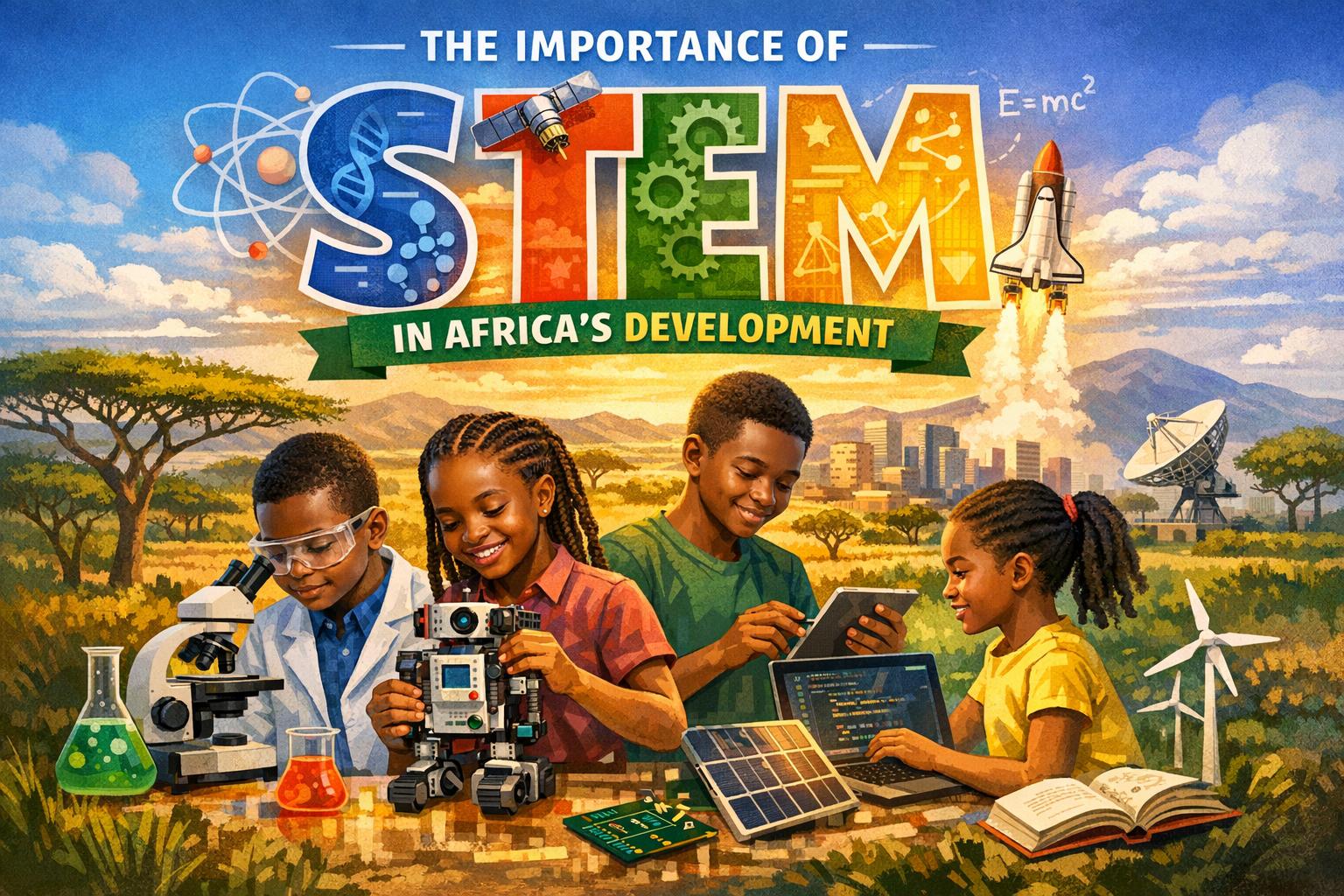
The role of Science, Technology, Engineering, and Mathematics (STEM) education in shaping the socio-economic landscape of nations cannot be overstated. In Africa, the drive towards long-term development is increasingly hinged on the transition from traditional reliance on raw material exports to a more diversified and knowledge-based economic framework. This transformation underscores the critical importance of STEM skills, which are pivotal in facilitating industrialization, infrastructure development, digital transformation, and technological innovation. This comprehensive exposition delves into various facets of how STEM education is integral to propelling economic growth in Africa and the challenges and opportunities this field brings.
Economic Growth through STEM Education
Historically, many African economies have been predominantly reliant on the export of raw materials. However, the contemporary economic paradigm shifts focus towards more diversified industrial bases that necessitate a skilled workforce. The World Bank emphasizes that sustainable economic growth in developing regions is intricately linked to investments in human capital, particularly within technical and scientific domains. By prioritizing STEM education, countries stand a better chance of cultivating competitive industries, enhancing productivity, and attracting foreign investments. These advances, in turn, form a solid foundation for sustained economic growth.
Linking STEM to Competitive Industries
Building competitive industries necessitates the presence of a workforce proficient in STEM fields. This skilled workforce can drive innovation, improve processes, and introduce efficiencies that elevate industries to international standards. For example, the burgeoning automotive, aerospace, and pharmaceuticals industries require a technological backbone supported by engineering expertise, research and development, and technological savvy. In this context, STEM education becomes a catalyst for industrial evolution and competitiveness on the global stage.
Attracting Foreign Investments
A region abundant with a skilled STEM workforce becomes inherently attractive to foreign investors. Investment from multinational corporations often follows talent and capabilities. Companies seeking to establish a presence in Africa will likely consider the availability of skilled professionals capable of innovating and managing complex operations. African nations that invest strategically in STEM education can capitalize on this dynamic, positioning themselves as prime destinations for foreign direct investments (FDI).
Addressing Infrastructure and Industrial Needs
African nations are confronted with significant infrastructure gaps across sectors such as transportation, energy, water systems, and housing. The relevance of engineers, technicians, and data specialists in addressing these gaps is paramount. They are at the forefront of designing, implementing, and maintaining robust infrastructure systems. Expanding access to quality STEM education is crucial in increasing the domestic supply of skilled professionals, thereby reducing reliance on external expertise.
The Role of Engineers in Infrastructure Development
Engineers play a vital role in the construction and maintenance of infrastructure such as roads, bridges, and public utilities. By equipping them with the appropriate skills through targeted educational programs, nations can ensure that infrastructure projects are executed with efficiency, sustainability, and longevity in mind. Such projects not only improve living standards but also bolster economic activities by enhancing connectivity and reducing transportation costs.
Renewable Energy: A Case Study
The move towards renewable energy is one of the promising dimensions in addressing Africa’s energy needs. The International Energy Agency acknowledges the substantial renewable energy potential in sub-Saharan Africa. Yet, a significant constraint remains: the technical capacity to harness this potential. Training local engineers in solar, wind, and grid technologies could play a pivotal role in achieving energy access goals, reducing costs, and promoting environmental sustainability.
Digital Transformation and Innovation
The rapid growth of mobile banking, e-commerce, and other digital services underscores Africa’s potential in the burgeoning digital economy. This sectoral growth relies heavily on the availability of software developers, data analysts, and cybersecurity specialists. To sustain and amplify this growth, STEM education provides the foundational skills necessary for nurturing talent in these areas.
Role of Computer Science and IT
Investment in computer science and information technology education is central to enabling participation in global markets. This education lays the groundwork for engaging in digital outsourcing, offering remote services, and fostering vibrant startup ecosystems. The emphasis on subjects such as mathematics, coding, and systems design is not just about filling current job demands but also about anticipating future needs in an ever-evolving digital world. Organizations like the African Development Bank are pivotal in supporting initiatives aimed at developing digital skills as a strategy for economic inclusion.
Innovation Hubs and Startup Ecosystems
Across Africa, innovation hubs and startup ecosystems are sprouting, serving as incubators for new ideas and technologies. These hubs provide a fertile ground where STEM graduates can contribute significantly through innovation. Such environments also facilitate knowledge sharing, networking, and collaboration, which are essential elements in fostering a robust digital economy.
Improving Health and Agricultural Productivity
The impact of STEM disciplines extends beyond industrial and digital applications; it is also profoundly significant in the health and agricultural sectors. Medical research, epidemiology, and biotechnology are pivotal in addressing public health challenges, while innovation in agriculture can profoundly impact food security and resilience to climate change.
Public Health Advancements
The outbreak of the COVID-19 pandemic highlighted the necessity of having local scientific research capacity and data modeling expertise. STEM education equips individuals with the skills necessary to engage in medical research, which facilitates the development of vaccines, the understanding of epidemiological trends, and the strengthening of health systems. Having a local workforce capable of responding to health crises can significantly expedite solutions and mitigate the impact of pandemics.
Agricultural Innovation
Agriculture remains the backbone of many African economies, employing a substantial proportion of the workforce. Enhancing agricultural productivity requires innovative approaches in crop science, irrigation systems, and climate adaptation strategies. Training agronomists, environmental scientists, and agricultural engineers can drive these innovations. Moreover, collaborations with institutions such as the Food and Agriculture Organization can facilitate the integration of science-based methods into traditional farming practices, improving yields and sustainability.
Expanding Access and Reducing Inequality
Despite notable progress in some regions, access to quality STEM education remains uneven across Africa, with several hurdles to overcome. Rural communities often suffer from a lack of laboratory facilities, inadequate teacher training, and unreliable electricity, which hampers educational outcomes.
Tackling Urban-Rural Disparities
To bridge the urban-rural gap in accessing quality STEM education, investments in resources such as laboratory facilities, trained educators, and stable electricity are essential. Expanding broadband access and equipping rural schools with necessary tools and technologies can significantly enhance learning experiences, ensuring that rural areas do not lag in educational achievements.
Promoting Gender Inclusion in STEM
Gender disparities also pose a challenge, with females historically underrepresented in engineering and technology fields. Encouraging female participation in STEM not only strengthens workforce capacity but also promotes inclusive growth. This can be achieved by adopting inclusive policies, providing mentorship opportunities, and creating an environment conducive to diversity in STEM fields.
Policy and Regional Cooperation
Recognizing the strategic significance of STEM, national governments and regional entities are increasingly incorporating science, technology, and innovation into long-term development frameworks. Policy alignment between educational systems and labor market needs is key to ensuring that graduates possess relevant technical skills.
The Role of the African Union
The African Union has been pivotal in integrating STEM into its strategic frameworks, promoting science, technology, and innovation as fundamental components for development. This alignment provides a coherent approach across the continent, encouraging countries to tailor educational policies that reflect national and regional economic priorities.
Public-Private Partnerships
Collaboration between universities, research institutions, and industry is crucial for translating academic knowledge into practical applications. Public-private partnerships can foster environments where academic discoveries and innovations are readily transferred into industries, enhancing technological self-reliance. This collaboration ultimately contributes to economic diversification and sustainable development.
Conclusion
In conclusion, STEM education forms a cornerstone of economic growth in Africa. It serves as a conduit for transitioning to diversified and knowledge-based economies. By addressing infrastructure needs, enabling digital transformation, enhancing health and agriculture, and promoting inclusive and equitable educational access, Africa can harness the full potential of its human capital. The combined efforts of governments, regional bodies, and private sectors will be instrumental in driving this vision forward, laying the groundwork for a sustainable future. As nations continue to invest in and prioritize STEM education, they position themselves advantageously to meet the challenges of the 21st century while unlocking new avenues for growth and prosperity.